


Don’t Be a Victim: Krav Maga as a Life Skill for Everyone
- Ilya Dunsky

- Apr 9, 2025
- 4 min read

"Don’t be a victim."It’s a simple sentence — but it carries deep meaning.
No one should ever be a victim — not physically, and not mentally. When Krav Maga is taught correctly, it becomes more than just a martial art. It becomes a self-defense system that offers real solutions to real-life threats.
That’s why we teach Krav Maga to a wide range of people: children, teenagers, men, women, civilians, and law enforcement personnel. Each group has different challenges and needs, and it’s the role of a professional instructor to deliver the right tools, in the right way.
Teaching Krav Maga to Children
When teaching kids, our focus goes beyond self-defense. We emphasize physical development — improving balance, coordination, and motor skills — while also teaching values like respect, discipline, and cooperation.
Children learn:
To respect authority and peers
To understand personal and social boundaries
To deal with common school or playground conflicts
To develop a love for movement and fitness
All of this is taught through games, challenges, and playful activities, helping kids grow stronger, safer, and more confident — both physically and emotionally.
Teaching Teenagers
Teenagers often face emotional and social challenges that affect their self-image and confidence. Krav Maga provides them with an outlet for physical growth while also reinforcing mental resilience.
We help teens:
Build confidence and emotional stability
Defend themselves and avoid becoming victims
Understand the importance of not becoming bullies themselves
Face physical challenges and overcome frustration or defeat
Training is intense and energetic, helping prepare their bodies for growth and minds for maturity.
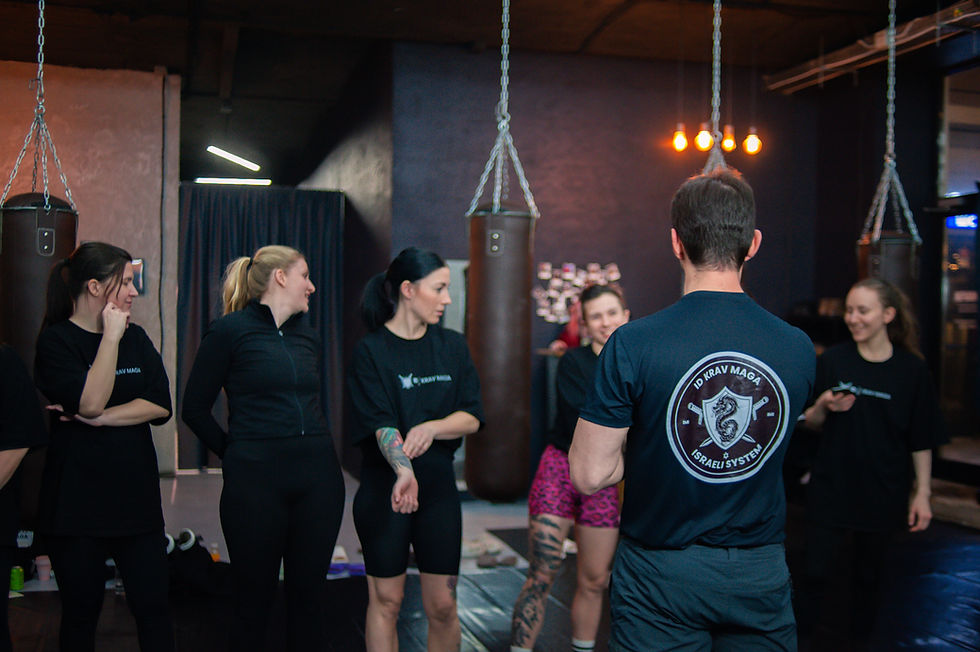
Teaching Women
Women face unique challenges — both in physical confrontations and in day-to-day mental threats. That’s why Krav Maga for women focuses on empowerment.
We teach:
Tactical understanding and threat awareness
Effective use of physical and mental strengths
Scenario-based training to simulate real dangers
Emotional control and recovery after stress
Through smart technique, awareness, and drills, women gain the tools to defend themselves and walk with confidence.
Teaching Men
Men often seek Krav Maga for its physical intensity and combative effectiveness. Our training focuses on both.
Men learn:
Combative skills and conditioning
Controlled aggression and confidence
Third-party protection — defending others
Conflict prevention through mental readiness
The more self-confidence men develop in training, the less they feel the need to prove anything in real confrontations.
Teaching Law Enforcement
For law enforcement, Krav Maga is a mission-critical skill. We tailor the training to match their equipment, duties, and threats.
Training includes:
Efficient use of force
Scenario-based simulations with and without weapons
Stress management and mental preparation
Operating in tactical gear under pressure
This builds a confident, alert officer who knows how to stay in control during the most difficult real-life encounters.
There Are No Hard Lines — Only Overlaps
Although we break training down by group, these categories overlap, like Olympic rings. A child may need structure like a soldier. A soldier may benefit from playfulness like a child.
That’s why a good instructor adapts Krav Maga to the group — based on:
Their physical and mental abilities
Their needs and motivations
Available time, space, and equipment
Sometimes a group’s needs and wants don’t match. That’s when an instructor must be honest, creative, and professional, finding simple yet effective ways to bring results.
Krav Maga Is Logical. Adaptable. Effective.
Krav Maga is for everyone. It is wide, it is structured, and it is incredibly flexible.It doesn't force people to fit it — it fits the people.
In Krav Maga, we adapt the system to real life:
Soldiers train in uniform and gear
Civilians train in jeans, dresses, or everyday clothes
Kids train in classrooms or playgrounds
Law enforcement train for their specific missions
My Personal Journey
Some years ago, I went through one of the most demanding — yet rewarding — experiences in my Krav Maga career.
I was 22, wrapping up my military service after three years. I had already been teaching Krav Maga for six years and held an Expert Level. At that time, I was involved in several places:
Teaching at the Wingate Institute (military division)
Preparing to sign with Lotar School (elite special forces training)
Covering classes at my local civilian gym while my instructor was abroad
For an entire month, I taught nearly every type of group imaginable.
My typical day?
Morning: fitness-week soldiers (not always motivated)
Midday: IDF instructor course
Afternoon: elite special forces drills at Lotar
Evening: kids aged 4–8, then 8–11, then teens, then adult beginners, and finally the advanced group (black belts)
That meant starting at 6:00 AM and finishing around 10:00 PM, twice a week.
At first — it was rough.But then I decided to embrace it. I mixed my teaching styles across the groups:
Taught kids like soldiers
Taught teens like elite units
Taught advanced adults like kids
And so on…
The result?Everyone was learning. Everyone was smiling. Everyone was growing — including me.
It was exhausting, but also incredibly fulfilling.Thanks to creativity — and a lot of coffee — we all made it through.
Final Thoughts
Krav Maga is not just about fighting.It’s about growing stronger, thinking clearly, acting with courage, and living without fear.
Whatever your age, experience, or role in life —Krav Maga has something to offer you.


Comments